Tribe
Hangout with friends, Rediscover your city, Find your tribe.

Tribe is a social event-discovery platform designed to help people get out, show up, and stay connected.
The platform brings event discovery, friend activity, and seamless ticket purchasing into one streamlined experience. With a focus on simplicity, community, and real-time visibility, Tribe aims to make planning social outings feel effortless and intuitive.
Role:
Head of Design
Duration:
January 2025 - September 2025 (8 Months)
Tools:
Figma
View Prototype
The Problem:
Current event platforms are optimized for scale, not social connection. Users need an easier way to discover and host casual, interest-based gatherings that feel approachable and community-driven.
Product Strategy & Team Collaboration
by contributing to product decisions, aligning design goals across engineering and business, and ensuring the app evolved to meet real needs.
Redesigning the app interface
To improve navigation, aesthetics, and user flows for both event hosts and attendees.
Establishing the brand system
by developing a cohesive design kit, typography standards, and visual direction.
My responsibilities included:
My Role:
Research:
Although the app was already about 70% completed when I was brought on, I started with a competitor analysis of the two main apps that I knew people were currently using to find events to determine the direction that I needed to head in in completing the app.
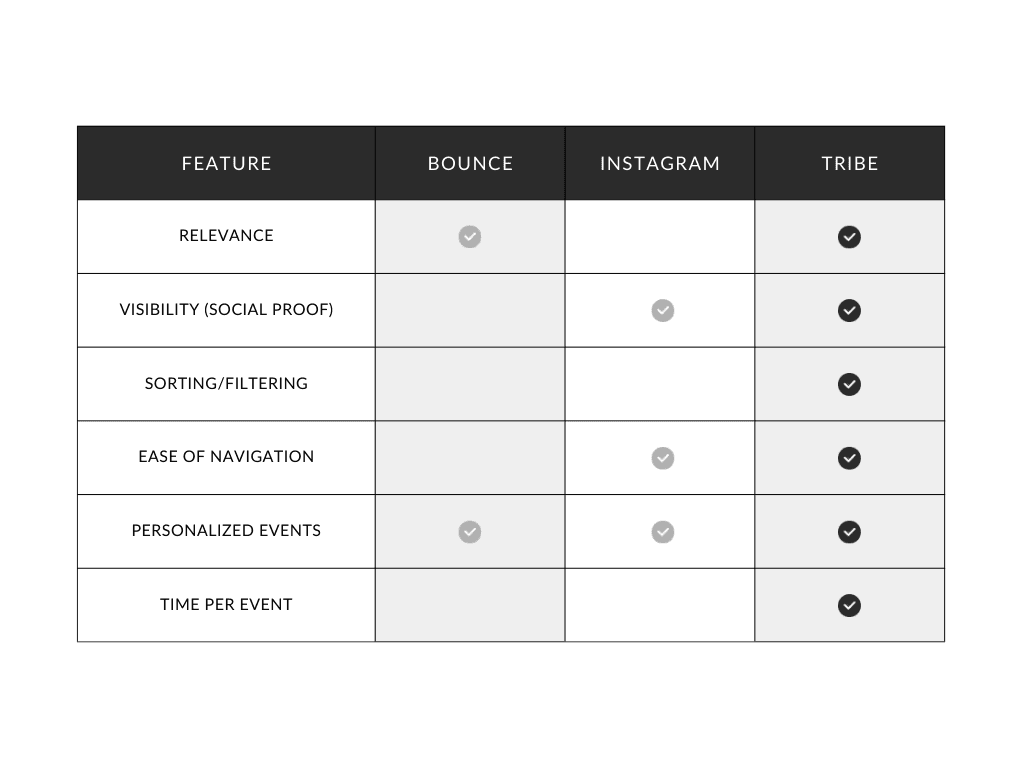
As a result of these considerations, I developed the following evaluation research questions:
What are the current pain points in finding events for users?
What considerations do users have when choosing which events to attend?
How do clubs/organisers advertise their events to students?
Understanding the Users
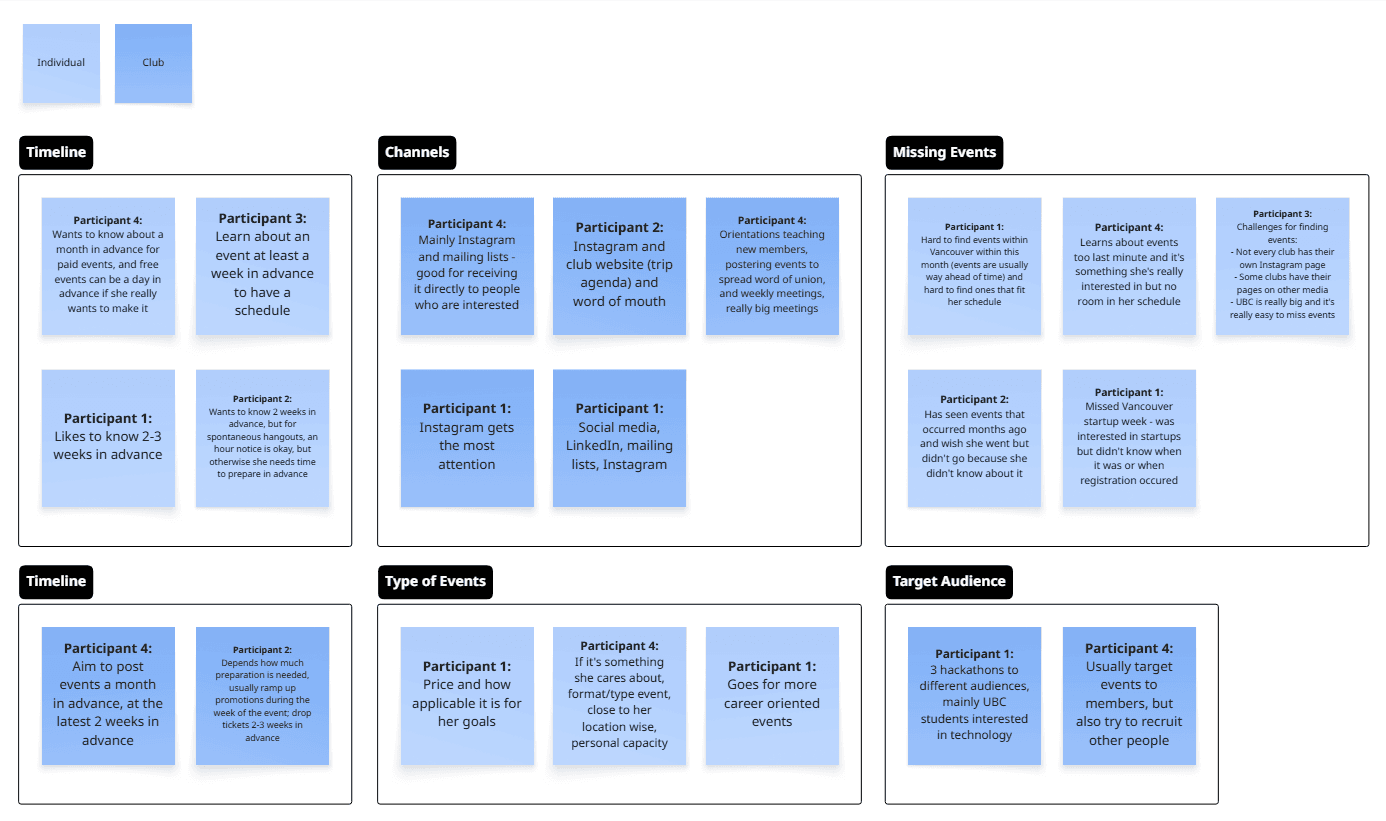
Based on the competitor analysis, I decided to conduct some user interviews to gain a better understanding of users needs. I used an online survey and follow-up semi-structured interviews. In the end we recieved 30 responses to our survey, of which we interviewed 4 participants (2 event organizers, and 2 attendees).
User Insight #1
Users experience difficulty in finding events due to timing and scattered information across multiple platforms when finding events.
The cluster labelled “Missing Events” in the affinity diagram reveals that users frequently miss events because they learned of the event or registration time too late. The questionnaire suggested some difficulty using all the platforms and tools, indicating that there is currently no single platform students prefer, thus needing to check multiple platforms to find an event.
User Insight #2
Users primarily consider the “Type of Event” when deciding whether to attend an event.
In Figure 5, the cluster labelled “Missing Events” in the affinity diagram reveals that students frequently miss events because they learned of the event or registration time too late. The questionnaire, as seen in Figure 1, suggested some difficulty with little variation (mean = 2.4, standard deviation = 0.27) using all the platforms and tools, indicating that there is currently no single platform students prefer, thus needing to check multiple platforms to find an event.
User Insight #3
Clubs and organizers primarily rely on Instagram and word of mouth to promote their events, often starting 2–3 weeks in advance.
In Figure 5, the cluster labelled “Missing Events” in the affinity diagram reveals that students frequently miss events because they learned of the event or registration time too late. The questionnaire, as seen in Figure 1, suggested some difficulty with little variation (mean = 2.4, standard deviation = 0.27) using all the platforms and tools, indicating that there is currently no single platform students prefer, thus needing to check multiple platforms to find an event.
User Personas
Jinu is looking for ways to discover events and meet new people within his community. With a busy schedule, he finds it difficult to identify events that align with his interests and fit into his availability. He needs a more efficient way to surface relevant social and professional events so he can build meaningful connections without spending excessive time searching.
Rumi is a marketing coordinator responsible for promoting upcoming events for an organization. She has received feedback that many interested people are missing events because they are not hearing about them in time. Rumi needs a more reliable way to ensure that relevant audiences are informed early and consistently about upcoming events.
Design Goals
Discover Events
Promote Events
Personalization. Users should be able to find events tailored to their interests. Our questionnaire results showed the top three most important considerations for attending events are Type of Event, Location, and Price, indicating that students prioritize event relevance, and personalization would help users easily find events that match their preferences.
Visibility. Users should be able to easily view key event details (start/end time, event type, friends attending, etc.). Questionnaire and interview findings revealed that students are more likely to attend events based on certain factors (type of event, location, price, friends attending, etc.), so we should ensure these details are easily accessible for them to quickly decide whether to attend or not.
Visibility. Users should be able to easily view key event details (start/end time, event type, friends attending, etc.). Questionnaire and interview findings revealed that students are more likely to attend events based on certain factors (type of event, location, price, friends attending, etc.), so we should ensure these details are easily accessible for them to quickly decide whether to attend or not.
Easy Navigation. Users should easily be able to find and input information about events. According to the interviews, the current process is time-consuming and scattered across platforms, with no consistency. Having consistent and predefined fields will streamline the process.
Timely Promotion. Users should only be able to schedule event promotion emails and advertisements before the event. Interview findings revealed that people got to know about the event after it had already happened. Sending promotional emails after the event damages credibility.
The Solution
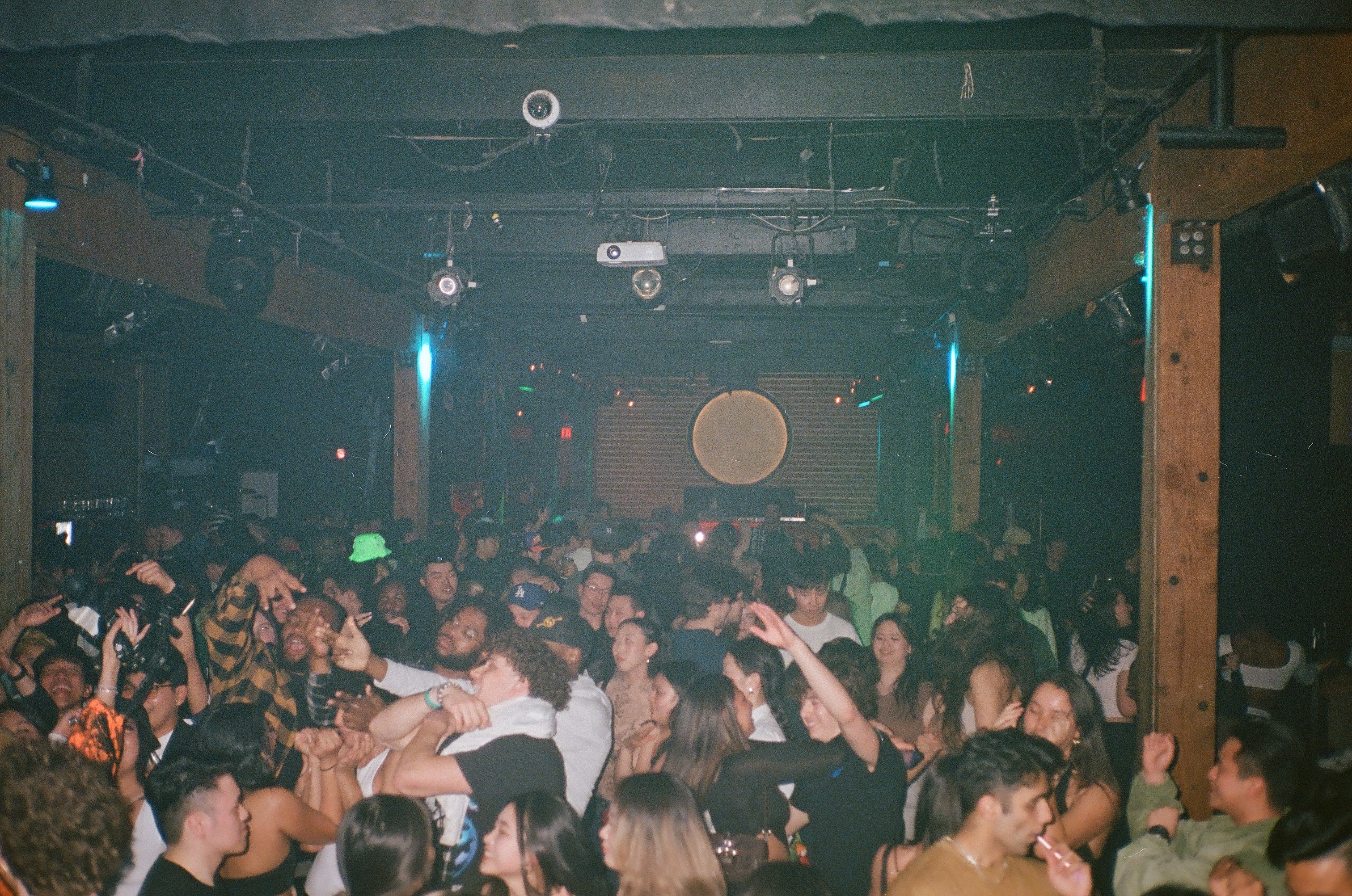
Working at Tribe was a defining experience in my design journey. Leading design across both brand and product pushed me to think deeply about scalability, usability, and the balance between creativity and function. From shaping the brand identity to redesigning core features like the live map, event feed, and host dashboard, every project challenged me to create a seamless, engaging, and user-centered platform. This role not only sharpened my skills in product design, UX research, and design systems but also taught me the importance of aligning design decisions with business goals while collaborating across a startup team.
The Outcome